Roof Heat Reduction Coatings Compared for Homes and Factories
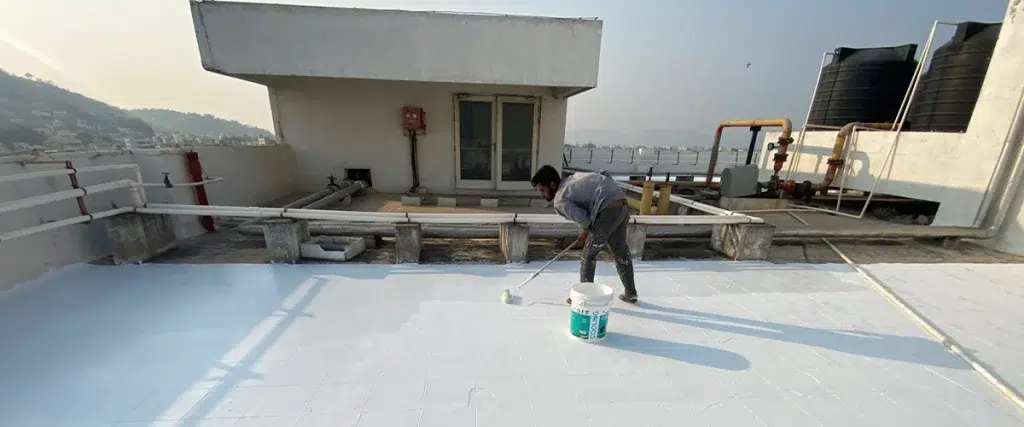
heat reflective paint

A roof heat reduction coating does not perform the same job on a home in Ahmedabad as it does on a warehouse in Bhiwandi. The chemistry behind the coating may be similar, but the roof underneath it, the temperature it starts from, and the outcome that matters to the owner are entirely different problems. Treating both segments with a single generic recommendation is where most cool roof decisions go wrong.

This piece breaks down why roof heat reduction coating behaves differently on a residential concrete slab compared to a factory’s metal sheet roof, and gives each segment a separate framework for evaluating what to buy.


Why Metal Roofs and Concrete Roofs Heat Up Differently

The starting point for any comparison is thermal mass, a property that determines how fast a material absorbs and releases heat. Concrete has high thermal mass. It heats slowly through the day, stores that heat, and releases it gradually, including after sunset. This is why an RCC roof without any coating still takes hours to reach peak surface temperature and continues radiating warmth into the room below well into the evening.

Galvanized steel or GI sheet roofing, the material used in the overwhelming majority of Indian industrial sheds and warehouses, behaves in the opposite way. Its thermal mass is low. It heats almost immediately once the sun is on it and cools down just as quickly once shaded. The practical consequence is that bare metal roofing reaches a higher peak surface temperature than concrete under identical sun exposure, often by a wide margin, because it has no material bulk to buffer the incoming solar load.

This single difference in thermal mass explains almost everything else in this comparison: why factories see steeper temperature drops after coating application, why the evaluation criteria differ, and why a heat reflective paint solution designed only around residential comfort will underdeliver in an industrial shed.


Homes: Comfort and Electricity Bills Drive the Decision

In a residential context, the roof is usually a single RCC slab of moderate area, walked on occasionally, and directly above living spaces. The measurable outcome homeowners care about is indoor comfort and the reduction in air-conditioning load during peak summer months. Because concrete’s high thermal mass already moderates the rate of heat gain, the improvement a reflective coating delivers is meaningful but incremental rather than dramatic.

For homes, a coating with a documented Solar Reflectance Index (SRI), tested against Cool Roof Rating Council (CRRC) protocols, gives a reliable basis for comparison across products. Indoor temperature reduction and the resulting drop in air-conditioner run time are the outcomes that translate most directly into a household electricity bill, which is usually the ROI conversation homeowners are actually having, even if they frame it as “make the top floor cooler.”


Factories and Warehouses: Worker Safety, Inventory, and Energy Cost at Scale

Industrial roofs change the equation on three fronts: material, area, and stakes. Metal sheet roofing dominates India’s pre-engineered building (PEB) sector, which has expanded rapidly alongside e-commerce and manufacturing growth. A large, uninsulated metal roof can push indoor warehouse temperatures well above ambient outdoor conditions, which is a direct workplace safety issue for personnel working under that roof for full shifts, and a quality risk for temperature-sensitive inventory stored below it.

Because metal starts from a hotter baseline than concrete, roof cooling solutions for industries tend to show a larger absolute temperature reduction after coating application. This is not a marketing claim, it follows directly from the thermal mass difference described above: a material that heats faster and higher has more room to fall once its surface is made reflective. The business case here is rarely built on comfort alone. It is built on measurable electricity cost avoided from reduced cooling load, on worker productivity and safety, and increasingly, on regulatory expectations, since several state cool roof policies, including Telangana’s, extend to non-residential and commercial buildings, a category that covers industrial sheds and warehouses in many jurisdictions.

At industrial scale, application efficiency also becomes a real evaluation factor. A roof spanning tens of thousands of square feet needs a coating system that covers efficiently, adheres reliably to metal substrates without failing at seams and fasteners, and resists the ponding and corrosion risks specific to metal roofing, none of which are meaningful concerns on a small residential concrete terrace.


Homes vs Factories: A Side-by-Side Comparison

Factor

Residential Roofs

Industrial and Warehouse Roofs

Typical roof type

RCC / concrete flat roof

Metal sheet (GI / galvanized steel), often PEB structures

Heat behavior

High thermal mass, slower heating, moderate peak temperature

Low thermal mass, rapid heating, higher peak temperature

Primary priority

Indoor comfort, reduced household electricity bills

Worker safety, inventory protection, energy cost at scale

Reported temperature reduction range (Panache Green data)

18-20°C above-deck reduction

20-25°C above-deck reduction

Key evaluation criteria

SRI/CRRC data, warranty, ease of application

Application efficiency at scale, metal-roof adhesion, corrosion resistance, documented large-roof case studies


Building Heat Reduction Solutions: What Each Segment Should Actually Check

For Homeowners

  • Ask for CRRC-tested SRI and solar reflectance figures rather than a general “cooling” claim.

  • Confirm indoor temperature reduction data, since surface cooling does not always translate proportionally into a cooler room below.

  • Check warranty terms and whether the system is a single coat or a multi-layer application, which affects both durability and cost.


For Facility and Plant Managers

  • Request case studies specific to metal roofing, not just concrete, since adhesion and performance behavior differ by substrate.

  • Evaluate coverage rate and application speed, since large roofs mean labour and downtime cost as much as material cost.

  • Confirm the system addresses seams, fasteners, and ponding-prone areas, the failure points most specific to metal sheet roofs.

  • Model the energy savings case in electricity terms, factoring in HVAC or ventilation load reduction across the full facility, not a single room.

This is where Panache Green, working as an integrated building envelope company rather than a single-product coating supplier, structures its cooling range by context instead of offering one formulation for every roof. CoolTops Premium is engineered for higher-exposure, higher-stakes applications, with SRI 109, 87% solar reflectance, and the above-deck temperature reductions referenced in the comparison table, tested to CRRC protocols. CoolTops Eco sits in the same reflective coating family as a more economical tier, suited to budget-sensitive or lower-exposure applications where the full premium specification is not the deciding factor. CoolTops Xpress is built for exterior and pavement-adjacent reflective application, extending the same cooling logic beyond the roof itself. All three sit within a CRRC-linked product family, so a facility manager comparing options for a warehouse and a homeowner comparing options for a terrace are not evaluating unrelated products, just different tiers of the same underlying building science.


Why This Distinction Matters Before You Buy

The mistake most buyers make is assuming a roof heat reduction coating is a single, interchangeable category. It is not. A product validated for a concrete terrace does not automatically perform the same way, structurally or thermally, on a metal industrial roof, and a coating system built for warehouse-scale application efficiency is often more than a residential terrace needs. Understanding the underlying thermal mass difference between concrete and metal, and being clear about whether the priority is a household electricity bill or a facility-wide energy and safety outcome, is what actually determines the right specification. Panache Green’s work across roofs “from roof to road,” spanning cooling, thermal insulation, waterproofing, and pervious pavements under one building envelope approach, is built on treating that distinction as the starting point of every recommendation, not an afterthought.

If you are evaluating a roof heat reduction coating for a home, a warehouse, or a portfolio of industrial sheds, Panache Green’s technical team can walk through the SRI data, substrate-specific application detail, and projected energy outcomes for your specific roof type. Reach out to discuss which tier of the CoolTops range fits your building.

Frequently Asked Questions

Metal has low thermal mass, so it absorbs and releases heat quickly, reaching a higher peak surface temperature. Concrete has high thermal mass, so it heats and cools more slowly, moderating its peak temperature even though it retains heat longer into the evening.

The underlying reflective technology can be shared, but the specification usually should not be identical. Industrial metal roofs need coatings validated for metal-specific adhesion, corrosion resistance, and large-area application efficiency, while residential concrete roofs prioritize ease of application and documented indoor comfort improvement.

Based on Panache Green’s CoolTops Premium data, above-deck surface temperature reduction runs 18-20°C on cement and concrete roofing and 20-25°C on metal roofing, with the larger metal-roof reduction explained by its hotter, more reactive starting baseline.

Request CRRC-tested SRI data, documented case studies on metal roofing specifically, information on coverage rate and application speed for large areas, and detail on how the system handles seams, fasteners, and ponding-prone zones common to metal sheet roofs.

In several states, yes. Telangana’s Cool Roof Policy, for instance, covers government and non-residential or commercial buildings, a category that includes industrial and warehouse structures in many jurisdictions, making roof heat reduction a compliance consideration and not only a comfort or cost one.

Benefits Of Choosing Panache’s Green Rated Products:

Our Partnership Programs

Our Partner

Cross complemented product and services providers can be enrolled under this partnership program (Roofing contractor, HVAC contractors, HVLS Fans supplier)

Know More Our Partner
Our Partner

Any individual from consultation fraternity to execution contractors can participate in such a program.

Know More Our Partner
Our Partner

DSA (Direct selling Agent) partnership program provides opportunities to become entrepreneur in COOL ROOFING industries to each and every individual who wants to make their career as freelancers.

Know More Our Partner
Our Partner

We provide platforms for applicators to become certified Cool Roof Professionals.

Know More Our Partner

Green Talk Initiatives

Green Talk Initiatives

Check out all our videos on GreenTalk here.

Partner with Panache Now !

Our Affiliations

We are associated with the leading organizations in India and abroad and are in constant engagement with them to further their efforts on environmental sustainability for our planet.

Client Success Stories