For RCC slab which insulation material is to be installed
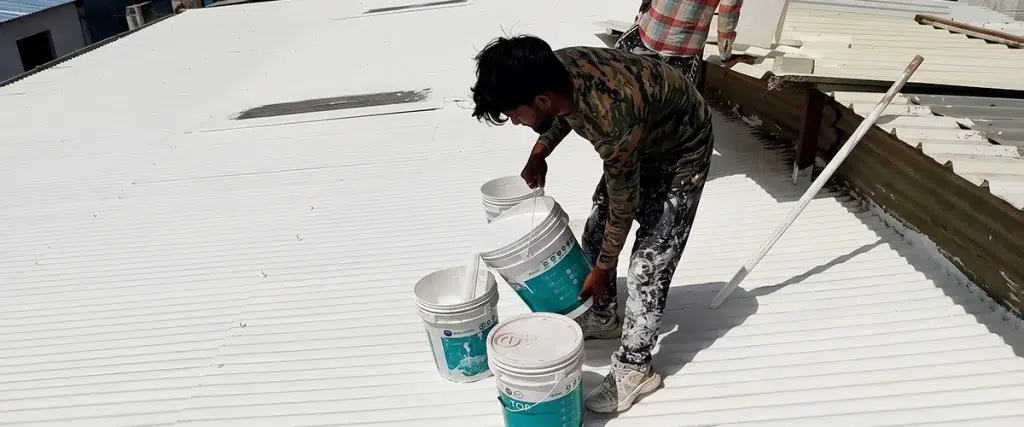
thermal insulation

For an exposed RCC roof slab, the three viable RCC slab insulation material formats are rigid XPS board, spray-applied PU foam, and insulating screed. Because most Indian flat roofs also need drainage correction and a stable base for waterproofing, insulating screed, laid to a falling gradient and bonded directly to the deck, is generally the most practical single-layer choice.


Why RCC Roof Slabs Need Insulation in the First Place

A reinforced cement concrete slab has a thermal mass and conductivity profile that works against occupant comfort in Indian climates. Concrete conducts heat efficiently: a bare RCC roof exposed to peak summer sun can reach surface temperatures well above ambient air temperature, and that heat migrates downward through the slab into the occupied space below over several hours, keeping indoor temperatures elevated long after sunset. This is the same building-physics mechanism that drives the Urban Heat Island effect at a city scale, replicated at the scale of a single roof. Thermal insulation for RCC roof slab assemblies works by slowing this conductive heat transfer, reducing the rate at which solar heat gain reaches the ceiling below and, correspondingly, reducing the mechanical cooling load required to maintain comfort.


The Three Material Formats, Defined

Each format solves the same underlying physics problem, resistance to conductive heat flow, but differs in how it is manufactured, installed, and integrated with the rest of the roof assembly.


Rigid XPS/EPS Board

Extruded or expanded polystyrene board is a factory-manufactured, closed-cell rigid panel laid across the slab in discrete sheets. It delivers a high R-value per inch of thickness and resists moisture absorption reasonably well, but it arrives as a distinct layer that requires a separate protective topping (typically a screed or paver layer) above it, plus careful sealing at every joint to prevent thermal bridging where heat can bypass the insulation through gaps.


Spray-Applied PU Foam

Polyurethane foam is sprayed on site and expands to form a continuous, joint-free membrane conforming to the slab’s exact geometry. This eliminates the joint-sealing concern inherent to board products and gives a very high R-value per inch. It does, however, need a UV-protective topcoat if it will be exposed to sunlight, since bare PU foam degrades under ultraviolet exposure, and fire-rating requirements must be verified against the specific building occupancy and applicable code before specification.


Insulating Screed

An insulating screed is a lightweight aggregate-based mortar, such as Panache Green’s InsulMix Roof Screed, trowel-applied or poured across the deck in a single monolithic layer. Because it is placed wet and cures in position, it can be screeded to a falling gradient during application, correcting roof drainage slope as part of the same operation that provides thermal resistance. It bonds directly to the structural slab, leaving no joints to seal, and forms a continuous, stable substrate ready to receive a waterproofing membrane above it.


Comparing the Three Formats Side by Side

The table below summarizes the engineering trade-offs relevant to an exposed Indian RCC roof, where drainage correction and waterproofing integration are almost always part of the scope alongside thermal performance.


Parameter

XPS Board

PU Foam (Spray-Applied)

Insulating Screed

R-value per inch

High

Very high

Moderate (varies with mix density and thickness)

Drainage correction capability

None (needs separate slope layer)

None (needs separate slope layer)

Built in, can be screeded to fall during installation

Joint / thermal-bridging risk

Present at board joints, requires sealing

Minimal, seamless application

None, monolithic layer with no joints

Fire consideration

Combustibility depends on board type, check code

Requires UV topcoat if exposed; fire rating must be verified for occupancy

Non-combustible, cementitious composition

Typical use case

New-build or protected-membrane roofs where design accommodates a rigid board layer

New-build or retrofit where seamless coverage over complex geometry is prioritized and UV/fire conditions are managed

Exposed RCC roofs needing combined drainage correction, insulation, and a waterproofing-ready substrate


Roof Insulation for Concrete Slab: Why Drainage Correction Changes the Decision

Most existing RCC roofs in India, particularly those built more than a few years ago, were not constructed with adequate slope to shed rainwater efficiently. Ponding water on a flat roof accelerates waterproofing failure and, indirectly, undermines any insulation layer beneath it by keeping the roof surface saturated. When the insulation format itself cannot correct this slope, as is the case with XPS board and PU foam, the project scope must add a separate screed layer purely for gradient correction, increasing the number of interfaces, the construction sequence length, and the number of places where workmanship errors can introduce leak paths. Insulating screed removes this extra step by combining slope correction and thermal resistance into one application, which is a meaningful simplification for retrofit projects where minimizing the number of distinct layers reduces both cost of coordination and risk of interface failure.


Waterproofing and Thermal Insulation for Slab: Why Sequencing and Substrate Quality Matter

Insulation and waterproofing are not independent decisions on an RCC roof; the insulation layer becomes the substrate the waterproofing membrane is bonded to. A substrate with joints, as in board insulation, or a substrate requiring an additional protective topping before waterproofing can proceed, as with PU foam, introduces more variables into membrane adhesion and long-term performance. An insulating screed provides a continuous, mechanically stable, cementitious surface that waterproofing systems, such as Panache Green’s FAP Waterproofing System or PU Seal, can bond to directly, without an intermediate protective layer solely to prepare the surface. This sequencing efficiency is a primary reason insulating screed is frequently specified as part of an integrated roof buildup rather than as a standalone insulation product.


Cool Roof Coating vs Insulation: Two Different Mechanisms, Not Substitutes

A frequent point of confusion among facility managers and consultants is whether a reflective cool roof coating can replace insulation, or vice versa. The two address different physical mechanisms. A cool roof coating, such as Panache Green’s CoolTops Premium, works by reflecting incident solar radiation before it is absorbed into the slab, reducing surface temperature at the point of contact with the sun; CRRC-tested data for CoolTops Premium shows an SRI of 109, 87 percent solar reflectance, and thermal emissivity of 0.86, translating to 18-20°C surface temperature reduction on cement or concrete surfaces and 20-25°C on metal roofing, with indoor temperature reductions of 4-8°C. Insulation, by contrast, works after heat has already entered the building material, slowing its conductive migration through the slab regardless of how much was reflected at the surface. The two are complementary rather than competing: a reflective coating reduces the heat load the insulation layer has to manage, and together they address both the reflective and conductive halves of the heat transfer problem. Neither is a substitute for the other in a rigorously engineered building envelope.


When XPS or PU Foam Remain the Right Choice

Insulating screed is not universally superior; it is the more practical default for the most common Indian condition, an exposed, undersloped RCC roof needing waterproofing integration. New-build projects designing a protected-membrane roof, where insulation sits above the waterproofing layer under pavers or ballast, or projects with complex roof geometry where seamless PU foam coverage solves a specific detailing problem, may find XPS board or PU foam the better-suited format. The decision should follow from the roof’s structural condition, drainage design, and waterproofing sequence, not from a default assumption about which material performs best in isolation.


Verdict

For an exposed RCC roof slab requiring drainage correction, waterproofing integration, and a single monolithic application, an insulating screed system such as Panache Green’s InsulMix Roof Screed is typically the most practical solution, while XPS board and PU foam remain technically capable alternatives suited to specific new-build or protected-roof configurations.

Frequently Asked Questions

You can, but it will not deliver the same immediate comfort benefit. Insulation slows heat conduction after the roof has already absorbed solar energy, so an uncoated dark roof can still reach high surface temperatures and radiate that heat into the room for hours. Without a reflective layer, the peak indoor temperature is not meaningfully reduced, only its timing shifts.

Panache Green’s CoolTops Premium system has recorded indoor temperature reductions of 4-8°C in field applications, driven by above-deck surface temperature reductions of 18-20°C on cement and concrete roofs and 20-25°C on metal roofs. Actual results depend on roof construction, orientation, and ventilation, but the direction and magnitude of improvement are well documented.

Cool roof coating addresses the majority of the heat gain problem in most non-AC buildings and is the correct first step. Insulation becomes more important for metal sheet roofs, which heat and cool rapidly, or for spaces requiring tighter 24-hour temperature stability, such as warehouses storing temperature-sensitive goods. Adding insulation later as a second layer is a reasonable phased approach.

Regular exterior paint is formulated primarily for color, weather resistance, and surface protection, without engineered solar reflectance or thermal emissivity targets. A summer cool roof coating is formulated and tested specifically to maximize solar reflectance and thermal emissivity, properties verified through CRRC testing and reported as a Solar Reflectance Index, which is what actually governs how much heat the roof surface absorbs.

Ask for CRRC-tested SRI, solar reflectance percentage, and thermal emissivity values, along with the number of product layers and coats in the system, since these determine both initial performance and how long that performance lasts under sun exposure. Products without independently verified test data or with single-coat, under-specified systems tend to lose reflectance faster and deliver less durable results.

Benefits Of Choosing Panache’s Green Rated Products:

Our Partnership Programs

Our Partner

Cross complemented product and services providers can be enrolled under this partnership program (Roofing contractor, HVAC contractors, HVLS Fans supplier)

Know More Our Partner
Our Partner

Any individual from consultation fraternity to execution contractors can participate in such a program.

Know More Our Partner
Our Partner

DSA (Direct selling Agent) partnership program provides opportunities to become entrepreneur in COOL ROOFING industries to each and every individual who wants to make their career as freelancers.

Know More Our Partner
Our Partner

We provide platforms for applicators to become certified Cool Roof Professionals.

Know More Our Partner

Green Talk Initiatives

Green Talk Initiatives

Check out all our videos on GreenTalk here.

Partner with Panache Now !

Our Affiliations

We are associated with the leading organizations in India and abroad and are in constant engagement with them to further their efforts on environmental sustainability for our planet.

Client Success Stories