Why Cool Roof Coating Demand Is Rising Across Indian Cities
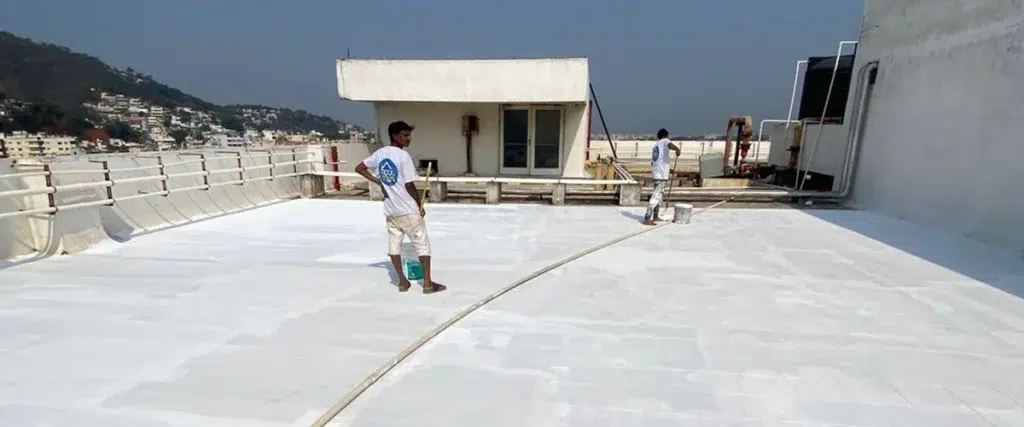
cool roof coating demand

Every summer, the gap between a building’s roof surface temperature and the surrounding air widens across Indian cities. Concrete terraces routinely cross 65 to 70 degrees Celsius on peak afternoons. Metal-roofed warehouses turn into radiant ovens by mid-morning. This is no longer a seasonal discomfort story. It is a measurable engineering and policy problem, and it is reshaping how architects, facility managers and developers specify roofing systems.

Demand for cool roof coating India-wide has grown steadily over the past three years, and the reasons are not marketing-driven. They are structural: regulation, climate risk, energy economics and green building certification are converging on the same conclusion. Roofs that reflect rather than absorb solar radiation are becoming a baseline expectation, not an upgrade.

The Regulatory Push: Cool Roofs Move From Guideline to Mandate

The clearest signal comes from Telangana. Its Cool Roof Policy (2023-2028) is India’s first state-wide mandate of its kind, requiring cool roofs on all government and non-residential or commercial buildings, and on residential plots of 600 square yards or more. Enforcement runs through the building-permit and occupancy-certificate process, which means a cool roof coating or equivalent reflective system is no longer optional documentation. It is a condition of approval.

The policy’s targets are specific: 30 square kilometres of cool roof coverage by 2024-25, scaling to 300 square kilometres by 2028, split roughly 200 square kilometres in Hyderabad and 100 square kilometres across the rest of the state. At that scale, the state projects annual electricity savings of around 600 million kWh and a one-time cumulative CO2 offset of roughly 30 million tonnes. Those are not aspirational figures pulled from a brochure. They are the kind of numbers that make procurement teams and municipal engineers pay attention.

Telangana is unlikely to remain an outlier. The Energy Conservation Building Code (ECBC) increasingly references reflective roofing as part of commercial compliance pathways, and municipal Heat Action Plans in cities such as Ahmedabad (India’s first, running since 2013), Hyderabad, Bhopal and Nagpur now promote reflective or cool roofing explicitly as a heat mitigation measure. As more states study Telangana’s outcomes, the direction of travel for building codes across India is fairly predictable: reflective roofing moves from recommended to required.

Rising Urban Heat and the Measurable Cost of the Urban Heat Island Effect

Behind the policy activity sits a physical reality. Dense concentrations of low-albedo roofing and paving absorb solar radiation during the day and release it slowly at night, pushing city temperatures well above those of surrounding rural areas. This is the Urban Heat Island effect, and it is not a theoretical model. It shows up directly in rooftop surface temperature readings, in nighttime cooling delays, and in the frequency and intensity of heat waves that Indian cities now record with increasing regularity.

The health and productivity implications are why cities are acting rather than waiting for national mandates. Cool roofs are estimated to reduce indoor temperatures by roughly 2.1 to 4.3 degrees Celsius compared with conventional roofing, a difference that matters directly for occupant health in un-air-conditioned spaces and for cooling load in air-conditioned ones. For hospitals, schools and residential buildings without full HVAC coverage, that temperature differential is closer to a public health metric than a comfort feature.

Energy Cost Pressure on Cooling-Heavy Buildings

For warehouses, factories and commercial offices, the urgency has a simpler driver: electricity bills. Metal-sheet industrial roofs conduct heat into the building envelope far faster than insulated RCC structures, and cooling loads in these facilities often represent the single largest variable operating expense after labour. A reflective roofing system that lowers above-deck surface temperature directly reduces the heat load the HVAC or ventilation system has to manage.

This is where the Solar Reflectance Index (SRI), tested independently by the Cool Roof Rating Council (CRRC), becomes the relevant technical benchmark rather than a marketing term. SRI combines solar reflectance and thermal emittance into a single comparable number, and it is the metric specifiers should ask for before treating any product as a genuine roof cooling paint solution. As an example of what performance data should look like, Panache Green’s CoolTops Premium carries an SRI of 109, with 87% solar reflectance and 0.86 emissivity, and is documented to reduce above-deck surface temperatures by 18 to 20 degrees Celsius on cement or concrete substrates and 20 to 25 degrees Celsius on metal roofing, translating to indoor temperature reductions of 4 to 8 degrees Celsius and a potential annual cooling energy reduction of 5 to 30%. Figures of that specificity, backed by third-party testing, are what separates an engineered building envelope product from a coating sold on the word “cool” alone.

Green Building Certification Demand

The fourth driver is institutional rather than regulatory or climatic. IGBC and LEED rating systems award credits for high solar-reflectance roofing as part of their heat island reduction criteria, and developers pursuing green building certification for commercial, hospitality or institutional projects increasingly need documented SRI performance to qualify. This has pulled cool roofing out of the “nice to have” category for architects and consultants working on IGBC-rated or LEED-rated developments, and into the specification document from day one.

This certification pathway also explains why credibility markers matter more in this category than in ordinary paint procurement. A product’s reflectance claim is only as trustworthy as the testing body behind it. CRRC membership, IGBC affiliation and a documented project history are the credentials a specifier should look for, not adjectives on a data sheet.

What This Means for a Building Owner Deciding Now Versus Later

Put these four drivers together and the trend line is unambiguous. Regulation is expanding state by state. Heat wave frequency and Urban Heat Island intensity are rising, not stabilising. Energy costs for cooling-heavy buildings continue to climb. And green building certification, once optional, is becoming a market expectation for institutional and commercial developers. None of these pressures point toward waiting.

For a building owner or facility manager, the practical question is less “should we adopt sustainable roofing solutions” and more “when.” Retrofitting a roof after a policy mandate takes effect, or after a heat-related occupant complaint, or after an energy audit flags cooling costs as disproportionate, is a reactive position. Specifying reflective roofing during a planned re-roofing cycle, new construction, or a scheduled maintenance window is not.

This is the context in which Panache Green operates. As a CRRC founding member with IGBC-linked leadership through founder Neetu Jain, Chairperson of the IGBC Vadodara Chapter, and a track record spanning over 50,000 projects and more than 50 lakh square feet of CoolTops coverage, Panache Green approaches roofing as part of an integrated building envelope system, cooling, thermal insulation, waterproofing and pervious paving under one technical framework, rather than as an isolated coating sale. For decision-makers evaluating cool roofing now, that combination of independently tested performance data and documented project history is the difference between a product claim and an engineering decision.
If you are evaluating cool roof coating India options for a warehouse, institutional campus, or certification-linked development, Panache Green’s technical team can walk through SRI test data, substrate-specific performance and project references relevant to your building type. Reach out to discuss where your roof stands and what a science-backed cooling and building envelope strategy looks like for your specific structure.

Frequently Asked Questions

A cool roof coating is engineered for high solar reflectance and thermal emittance, measured through the Solar Reflectance Index (SRI) and tested by bodies such as the CRRC. Regular roof paint may improve appearance or offer basic waterproofing but is not independently tested for reflectance performance, so it cannot be assumed to deliver comparable surface or indoor temperature reduction.

It is currently mandatory in Telangana under the state’s Cool Roof Policy (2023-2028) for government and non-residential buildings, and for residential plots of 600 square yards or more, enforced through building permits and occupancy certificates. Other cities and states are moving in the same direction through Heat Action Plans and ECBC compliance references, so specifiers elsewhere should expect similar requirements over time.

Independent estimates for cool roofs generally cite a reduction of roughly 2.1 to 4.3 degrees Celsius indoors compared with conventional roofing. Product-specific performance can vary; for example, documented testing for Panache Green’s CoolTops Premium shows a 4 to 8 degree Celsius indoor temperature reduction alongside an 18 to 25 degree Celsius drop in above-deck surface temperature, depending on the substrate.

Yes. Both IGBC and LEED rating systems award credits for roofing with high solar reflectance as part of their heat island reduction criteria. Developers pursuing certification typically need documented SRI data from an independent testing body to claim these credits, which is why third-party verification matters more in this category than a general reflectance claim.

Buildings with large exposed roof areas and high cooling loads see the most measurable benefit, particularly warehouses and factories with metal-sheet roofing, hospitals and educational institutions with limited HVAC coverage, and commercial or hospitality developments pursuing green building certification. Government and public buildings in Telangana fall under a direct policy mandate.

Benefits Of Choosing Panache’s Green Rated Products:

Our Partnership Programs

Our Partner

Cross complemented product and services providers can be enrolled under this partnership program (Roofing contractor, HVAC contractors, HVLS Fans supplier)

Know More Our Partner
Our Partner

Any individual from consultation fraternity to execution contractors can participate in such a program.

Know More Our Partner
Our Partner

DSA (Direct selling Agent) partnership program provides opportunities to become entrepreneur in COOL ROOFING industries to each and every individual who wants to make their career as freelancers.

Know More Our Partner
Our Partner

We provide platforms for applicators to become certified Cool Roof Professionals.

Know More Our Partner

Green Talk Initiatives

Green Talk Initiatives

Check out all our videos on GreenTalk here.

Partner with Panache Now !

Our Affiliations

We are associated with the leading organizations in India and abroad and are in constant engagement with them to further their efforts on environmental sustainability for our planet.

Client Success Stories