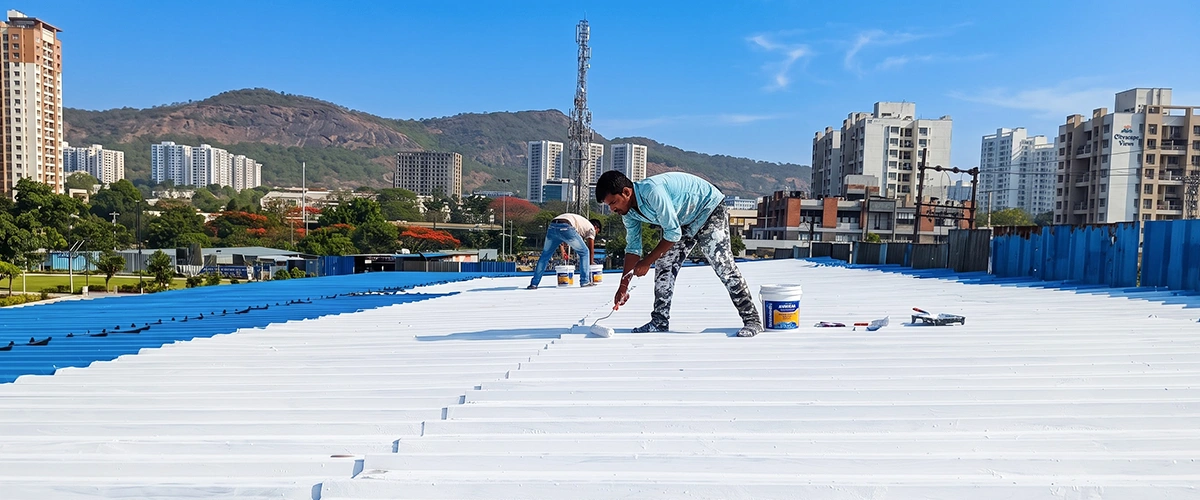
A solar reflective coating is a surface layer designed to reflect sunlight instead of absorbing it. It is the working part of a cool roof, and its performance is defined by two properties: how much solar energy it reflects, and how well it releases the heat it does absorb. These are combined in the Solar Reflective Index, or SRI. This page explains the science behind a high reflective paint, and how Panache applies it in the Cool Tops and Cool Wrap ranges.
Green Pro certified high SRI systems for roofs, walls and pavements
Panache offers a Green Pro certified range of solar reflective coatings and paints for roofs, walls, pavements, cycle tracks, driveways and roads. They use NIR reflection technology and nanotechnology to reduce the generation of heat and the ingress of heat indoors. Browse the reflecting coatings for the full list.
Sunlight is a mix of ultraviolet, visible and infrared radiation. Almost 58 to 60 percent of the solar radiation reaching the earth is infrared. When a surface absorbs radiation, the energy is converted into heat. Roofs, walls, roads, sheds and tanks with low reflectivity and low emissivity heat to 60 to 75 °C, and pass that heat indoors and into the surrounding air.
A solar reflective coating changes the outcome in two ways. The first is solar reflectance, also called albedo, which is the share of incoming solar energy that the surface sends back. Reflective pigments in the coating reflect infrared radiation, so the substrate does not heat up.
The second is thermal emittance, which is the ability of the surface to radiate away absorbed or non-reflected heat. It matters most in warm and sunny climates. A material with high reflectance and high emittance generates less heat and stays cooler for longer.
The Solar Reflective Index combines both properties into a single value. It is scaled so that a standard black surface is 0 and a standard white surface is 100, and a good cool surface material is above 100. With such a coating, roofs stay up to 20 to 28 °C cooler and walls up to 10 °C cooler than conventional materials in peak summer. SRI is calculated from measured solar reflectance and thermal emittance, so the test reports behind the numbers are worth reading.
Intense urbanisation has produced concrete surfaces with temperatures up to 70 °C, and the air over cities gets warmer, which strengthens the Urban Heat Island effect. At an ambient temperature of 45 °C, a metal surface can reach 80 °C and a cement surface 65 to 70 °C.
Heat stress lasts most of the year, and the demand for thermal comfort is growing with the middle class, construction and incomes. It is met through air conditioners, the most prominent source of electricity consumption in buildings.
A cool roof is a promising and reliable passive strategy. Raising the albedo of a roof reduces solar heat gain, saves electricity, lowers peak power demand and curbs pollution. It cools the outside air and improves air quality by slowing smog forming reactions.
Cool surfaces reduce UHI intensity and building cooling loads, which lowers electricity demand and greenhouse gas emissions from power plants. Effectiveness is assessed using SRI and variations in air temperature.
Carbon Footprint: Calculate your carbon footprint through an easy-to-use calculator.
Cool Roof Energy Saving: Understand how you use and can save energy in your company, office or house.
Cost Calculator: Find out how much it will cost you to make your premises environmentally sustainable.
RCC roofs, metal sheets, tanks and pipelines.
Roads, pathways, driveways and cycle tracks.
Sun exposed exterior walls.
Cooltops Premium and Cooltops Classic solar reflective coating systems.
A cooling and waterproofing system in one.
All Panache products are Green Pro and GRIHA certified. EPD certification and CRRC certification for the cooling high SRI products are in process. Using the products reduces power costs, CO2 emissions and GHG emissions, and improves thermal comfort, health benefits, product quality and the indoor environment.
Share your project details to receive a quotation for solar reflective coating.
Water Proofing: roof and structure waterproofing.
Thermal Insulation: Insulmix roof screed, wall plaster and wall texture.
Water Repellents / Sealants: protection for masonry and exterior walls.
Metal Care: protective treatments for metal surfaces.
Wood Care: protective treatments for wooden surfaces.
A cool roof coating consists of a binder, usually an organic or silicone compound, blended with pigments and other additives. It protects roof membranes for longer life cycles and reflects solar radiation for lower air conditioning costs.
The main components are the binder, pigment, water and reflective pigments. Water is the liquid carrier that provides the viscosity to spread the coating as a thin layer. The majority of white coatings today are water based.
An energy efficient white reflective elastomeric coating manufactured by Panache can reflect up to 92 percent of visible light and keeps the roof surface much cooler than aluminium, black or non-reflective roofing. Lower temperatures mean less energy use and money saved, and the elastomeric coating protects the substrate and adds years to the roof.
We are associated with the leading organizations in India and abroad and are in constant engagement with them to further their efforts on environmental sustainability for our planet.











 Get Free Audits
 Get Free Quote